
An electronics engineer designs, develops, tests, and improves electronic systems. As a light current specialist focused on embedded systems and IoT, I bridge hardware and firmware to create connected devices that solve real problems.
Table of Contents
- What is an Electronics Engineer?
- Core Responsibilities of an Electronics Engineer
- Typical Day and Projects
- Electronics Design and Tools used by Electronic Design Engineers
- Embedded Systems and IoT: Why Electronics Engineers Matter
- Skills Every Electronics Engineer Should Have
- Tips for Electronics Engineering
- Did You Know About Electronics Engineers?
- Frequently Asked Questions
- What education is required to become an electronics engineer?
- Can an electronics design engineer do both heavy and light current work?
- How does an electronics engineer work with software teams?
- What tools should an aspiring electronic design engineer learn first?
- How long does it take to prototype an IoT device?
- Conclusion
What is an Electronics Engineer?
An electronics engineer applies principles of electrical and electronics engineering to design circuits, sensors, and control systems. In industry, roles split into heavy and light current specializations: heavy current engineers work on high-voltage power distribution and large electrical machines, while light current engineers concentrate on low-voltage electronics, signals, communications, and electronics design for devices and systems.
Core Responsibilities of an Electronics Engineer
They typically handle a wide range of tasks that bring a product from concept to prototype and beyond:
- Circuit design and simulation (analog and digital).
- PCB layout, prototyping, and design-for-manufacture reviews.
- Embedded systems development and firmware implementation.
- Sensor selection and system integration for IoT devices.
- Test plans, verification, EMC considerations, and certification support.
- Cross-disciplinary coordination with software, mechanical, and product teams.
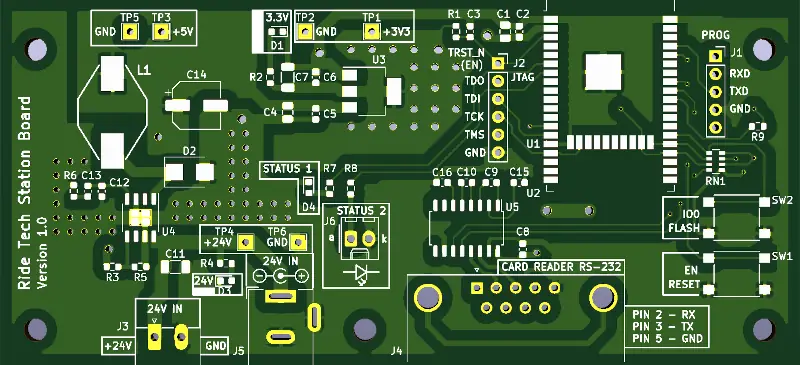
The following image shows an example of a relatively simple PCB or Printed Circuit Board designed by an electronics engineer.
Typical Day and Projects
Daily work for an electronics engineer varies by project stage. Typical activities include selecting microcontrollers and other components, refining firmware drivers, debugging communication stacks, reviewing schematics, and running lab validation tests. For Internet of Things projects, responsibilities expand to include wireless module selection, power-budgeting for battery operation, and secure data transport.
Electronics Design and Tools used by Electronic Design Engineers
Good electronics design blends theory, simulation, and real-world constraints. An electronic design engineer commonly uses:
- Schematic capture and SPICE simulation for early validation.
- PCB CAD tools for layout and design rule checks.
- Version control, BOM management, and component lifecycle tools.
- IDEs, in-circuit debuggers, and hardware-in-the-loop rigs for embedded software development.
Design reviews focus on signal integrity, power distribution, thermal behavior, and EMC compliance.
Embedded Systems and IoT: Why Electronics Engineers Matter
Embedded systems are the small computers inside devices; the IoT (internet of things) connects those systems to networks and cloud services. Engineers who span hardware and firmware are essential: they implement low-level drivers, board bring-up procedures, and application firmware that allow connected products to function reliably in the field.
Skills Every Electronics Engineer Should Have
- Solid foundation in electrical and electronics engineering fundamentals.
- Proficiency with electronics design tools and PCB best practices.
- Experience in embedded software development, including RTOS concepts and driver design.
- Programming skills in C/C++ and scripting for test automation.
- Knowledge of common IoT protocols (MQTT, HTTP, BLE) and security basics.
- Practical lab skills with oscilloscopes, logic analyzers, and power supplies.
Tips for Electronics Engineering
- Keep schematics and annotations clear for the whole team.
- Modularize firmware early to enable parallel development and reuse.
- Start low-power strategies at the architecture stage for IoT devices.
- Automate unit tests for embedded software where practical.
- Establish reproducible test procedures; document failures and fixes.
Did You Know About Electronics Engineers?
- The heavy vs. light current split dates back to infrastructure needs: heavy current for power delivery and motors; light current for signaling and control.
- Modern consumer products often contain multiple embedded systems that must be coordinated by electronics engineers.
- Advances in low-power radios and low-cost microcontrollers dramatically expanded the reach of IoT and increased demand for embedded systems skills.
Frequently Asked Questions
What education is required to become an electronics engineer?
Most professionals hold a degree in electrical and electronics engineering or a related field. Employers also highly value practical, hands-on project experience, particularly in embedded systems and IoT.
Can an electronics design engineer do both heavy and light current work?
Yes, but specialization is common. Heavy current roles require training in high-voltage safety, power electronics, and infrastructure concerns. Light current roles emphasize low-voltage electronics design, communications, and embedded software development.
How does an electronics engineer work with software teams?
Hardware engineers supply hardware specs, timing, and interface details. For embedded systems, collaboration is continuous: firmware must match hardware constraints, and software teams rely on hardware testing fixtures and well-documented interfaces.
What tools should an aspiring electronic design engineer learn first?
Begin with schematic capture, SPICE simulation basics, and PCB CAD tools. For firmware, learn C/C++ and a common embedded toolchain (GCC, Keil, IAR, or similar), plus debugging tools and unit testing approaches.
How long does it take to prototype an IoT device?
Timelines vary by complexity. A simple sensor node prototype can be built in weeks; a production-ready, certified device can take several months. Reusable modules and clear requirements shorten the schedule.
Conclusion
An electronics engineer turns electrical and electronics engineering theory into working hardware and firmware. For light current specialists focused on embedded systems and the Internet of Things, that means handling electronics design, embedded software development, and secure connectivity to produce reliable IoT products.
If you need an electronic design engineer or embedded software development expertise to develop your connected device, an electronics engineer brings the practical, cross-disciplinary skills needed to move your idea from prototype to product.